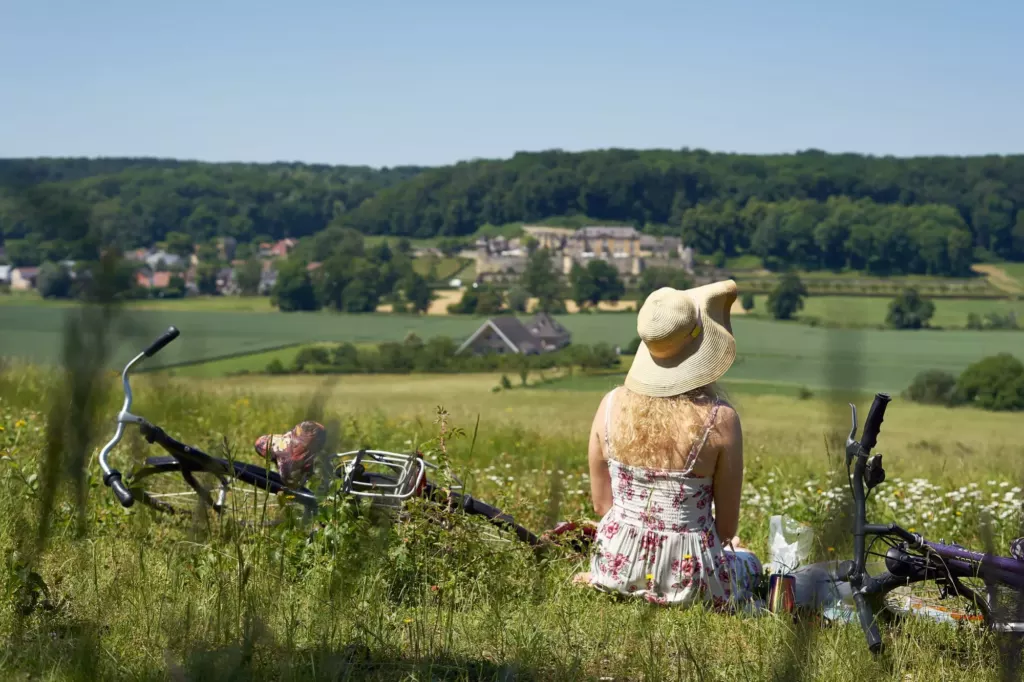
Slow tourism favors slowness, proximity and a low environmental impact. Night trains, bikepacking, canals and sea crossings now make up coherent and accessible journeys.
The train, symbol of slow travel
The rail network is emerging as the flagship mode of slow tourism: SNCF carried more than 130 million passengers on its TGVs in 2024, and night trains, relaunched since 2021, are gaining ground. According to Ademe, a train journey emits on average between 30 and 50 times less CO2 than an equivalent flight (a Paris–Marseille: ~2.9 kg CO2 by TGV vs >150 kg by plane).
Bikes and bikepacking: exploring at a human pace
Long-distance cycling, greenways and bikepacking extend the slow experience. The Canal du Midi illustrates this dynamic: 240 km of cycle routes, around 1.5 million annual users and regional investments (€700,000 for the cycle route, including a 25 km link around Monségur).
Canal boats and river tourism
Canals offer calm crossings and nearby tourism, with accommodation and services adapted to cycle tourists and hikers.
Ferries and sailing vessels: the sea as a journey
Maritime slow travel is gaining ground: EU ports recorded 417.8 million passengers in 2024, and operators like Brittany Ferries carried more than 1.2 million people between June and September 2025 (+3%). A sailboat or ferry allows boarding with peace of mind, sometimes without a car, and makes the crossing an integral part of the stay.
International routes and night trains
New connections make night travel easier: for example, the EuroNight Basel–Malmö line, put into service on April 15, offers weekly departures and tickets ranging from 53 to 632 CHF depending on the chosen level of comfort.
Practical tips
- Book early and favor off-peak days;
- Combine train, ferry and soft mobility (bike, walking);
- Consider the night train to gain a day and save a night’s hotel;
- Choose eco-responsible certified accommodations and providers.
“That’s also the freedom of such a trip — stopping for longer than planned” — a remark collected from cyclists on the Canal du Midi.
Slow tourism is not a magic solution: it requires intelligently combining modes (train to the port, car-free ferry, bike stopovers) and depends on modernizations (fleet electrification, better connections) to sustainably reduce the travel carbon footprint.
Sources:
- actu.fr — Slow tourism: why train travel is increasingly appealing
- Figaro Nautisme — Maritime slow travel: ferries and sailboats, the trend replacing planes this summer – Nautical News
- 24 heures — How much does it cost to travel Basel–Malmö by night train?