The third barometer from the Club Tourisme & Technologie, presented at IFTM, and a parallel survey by L’Écho touristique provide a precise snapshot of artificial intelligence adoption in the sector: widespread use, insufficient governance, and scarce training.
Accelerated adoption: AI has become a daily tool
The third barometer on artificial intelligence published by the Club Tourisme & Technologie (CTT) was unveiled during the IFTM trade show in Paris. The survey, conducted among the club’s members — tourism decision-makers with largely tech-oriented profiles — shows a strong increase in usage: 90% of CTT members say they use AI daily in 2026, compared with 48% in 2025. Responses were collected between June 23 and August 31, 2026.
Which tools and which uses?
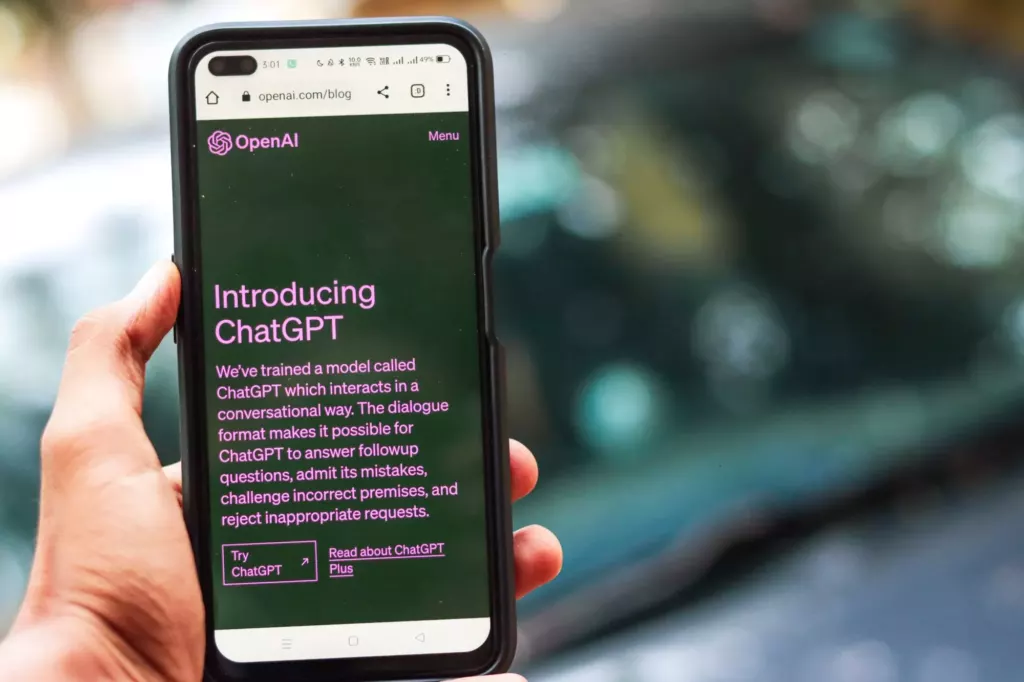
Among the preferred tools, OpenAI’s ChatGPT remains the main entry point (72%), but Anthropic’s Claude (69%) and Google’s Gemini (52%) are also frequently cited. The French model Vibe from Mistral is virtually absent from the responses.
All CTT members surveyed use AI for information search, a shift that, according to the barometer’s authors, represents “the greatest revolution in usage since the creation of Google in 1998.”
AI is creating the greatest revolution in usage since Google was created in 1998.
The survey nonetheless offers a quantitative note of caution: Google continues to dominate in query volume (around 15 billion queries per day) versus about 2.5 billion daily queries attributed to ChatGPT, indicating that usages coexist but that AI is gaining centrality.
Agentic AI: first deployments
The barometer, for the first time, questioned the use of agentic AI, AIs capable of acting autonomously to carry out complex tasks. Result: 19% of members report having deployed agentic AI at scale, and 32% have begun deployment. This reflects a rise in automated systems across various functions within tourism.
Governance and training: persistent gaps
While AI is spreading rapidly, the framework for its use remains incomplete. Among CTT members, 45% indicate that their company has an official policy with clear rules, while 41% say this work is underway. The results differ markedly in the larger sample from L’Écho touristique: among 210 tourism professionals (agencies, tour operators, platforms…), only 57% report using AI daily and 19% say they benefit from clear usage rules.
Training is particularly lacking: only 11% of employees say they have received comprehensive AI training. At the same time, one in two employees fears that AI could put their job at risk in the long term.
Risks identified by leaders
From the leaders’ perspective, two risks stand out as priorities: errors or “hallucinations” by AI tools and the security/confidentiality of customer data. These concerns largely explain the call for implementing good practices, internal policies, and targeted training, which remain, for now, too rare.
The results come from two complementary sources: the internal survey of CTT members and the questionnaire sent to readers of L’Écho touristique, conducted between June 23 and August 31, 2026.
The Club Tourisme & Technologie is a think tank dedicated to innovation, bringing together around fifty decision-makers from travel and digital sectors.
American AIs capture the bulk of attention: ChatGPT dominates, followed by Claude and Gemini. Mistral remains relatively discreet.
The barometer highlights a shift in usage and a necessity: to support this transition with operational rules, training, and appropriate security measures so that AI becomes a productive lever without increasing risks for companies and employees.
Source : CTT Barometer on artificial intelligence: key takeaways